Beginner’s science guide
What Is NMN? Research, NAD+ and Safety Explained
NMN is nicotinamide mononucleotide, a metabolic intermediate that cells can convert into NAD+. Human research shows effects on selected NAD-related measurements, but NMN has not been proven to reverse aging, prevent disease or extend human lifespan.
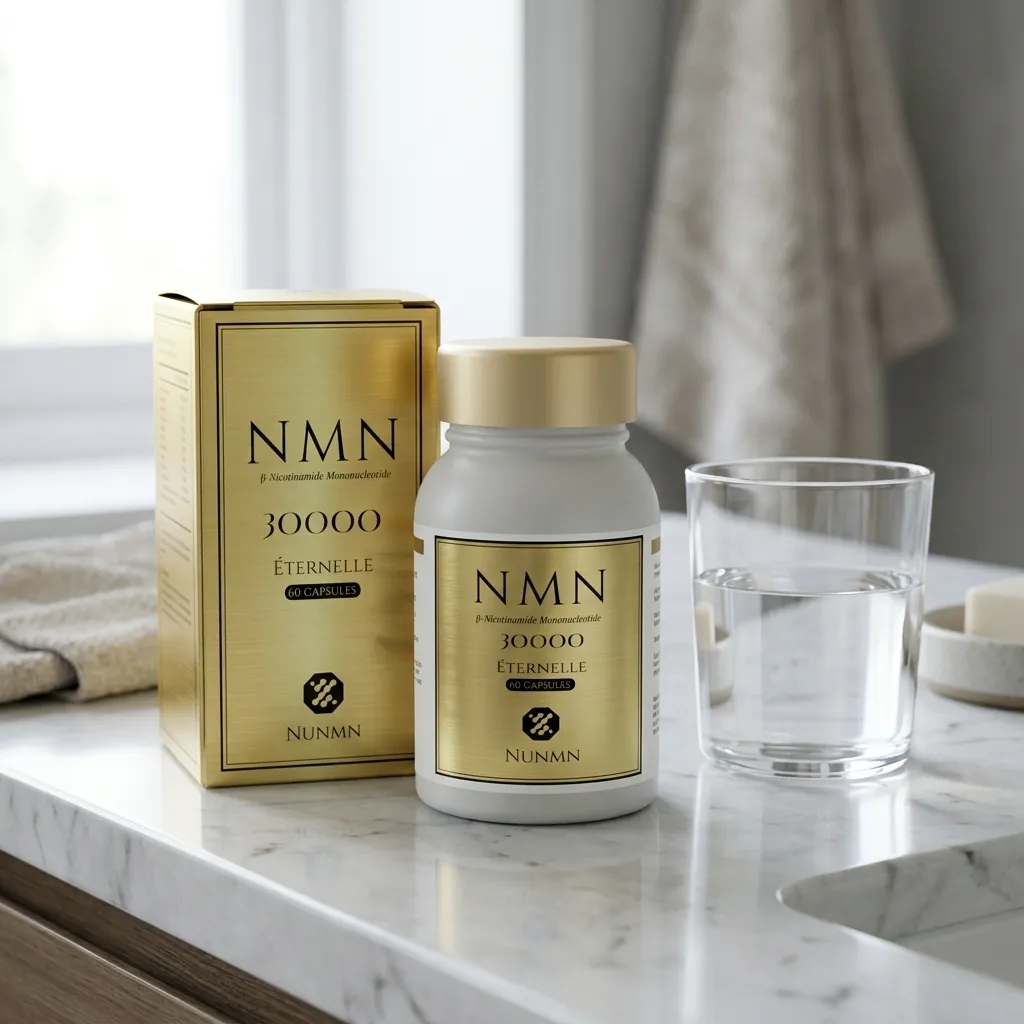
NMN explained in plain language
Nicotinamide mononucleotide, or NMN, is a naturally occurring intermediate in NAD+ biosynthesis. Cells can convert NMN into NAD+, an essential coenzyme used in metabolism and signaling, but current human evidence does not establish NMN as a treatment for aging or disease.
- NMN is a precursor to NAD+, not the same molecule.
- The body can make NMN from nicotinamide and nicotinamide riboside.
- Small human trials show that oral NMN can raise some NAD-related measurements.
- Clinical benefits remain mixed, outcome-specific and uncertain.
- Short-term trials have generally reported good tolerability in selected adults.
- Canadian licensing and warnings must be checked product by product.
What is NMN?
NMN is the abbreviation for nicotinamide mononucleotide. Chemically, it contains a nicotinamide group, a ribose sugar and a phosphate group. In mammalian cells, NMN sits immediately before NAD+ in major salvage and precursor pathways.
The enzyme family called nicotinamide mononucleotide adenylyltransferases, or NMNATs, converts NMN into NAD+. Because NAD+ is used continuously and broken down by multiple enzymes, cells must keep producing and recycling it. See what NAD+ is for the coenzyme NMN helps the body produce.
How NMN becomes NAD+
The most discussed route is the nicotinamide salvage pathway. NAD-consuming enzymes release nicotinamide, the enzyme NAMPT converts nicotinamide into NMN, and NMNAT enzymes convert NMN into NAD+. Nicotinamide riboside can also be phosphorylated into NMN before entering the same final step. The nicotinamide riboside explainer covers the related precursor pathway.
- NAD+ is consumed. Enzymes such as sirtuins, PARPs and CD38 use NAD+ and release products that include nicotinamide.
- Nicotinamide is salvaged. NAMPT adds a phosphoribosyl group to form NMN.
- NMN is converted. NMNAT enzymes add an adenylyl group to produce NAD+.
- NAD+ returns to cellular reactions. It participates in redox metabolism and serves as a substrate for signaling enzymes.
Cells compartmentalize these reactions, so blood levels cannot fully describe NAD metabolism inside every tissue.
Is NMN natural, and is it found in food?
NMN occurs naturally as a metabolic intermediate in living organisms, and small amounts have been reported in foods such as edamame, broccoli, cabbage and avocado. The amounts can vary by species, freshness, preparation and analytical method. For context on dietary sources and realistic amounts, read NAD+ foods versus supplements.
Calling a supplement “natural” does not establish its safety, purity or effectiveness. A concentrated capsule should be evaluated by its exact ingredient amount, manufacturing documentation, label, warnings and Canadian product status—not by the fact that trace NMN can occur in food.
What does NMN research show?
NMN research spans cell experiments, animal models and human clinical trials. These evidence types answer different questions and should not be blended into one claim. The NMN and NAD+ research overview explains how these evidence levels should be interpreted.
In-vitro research
Cell experiments help map enzymes, transport, NAD-related signaling and mechanistic hypotheses. They cannot establish an oral dose or human health outcome.
Animal research
Rodent studies have explored metabolism, physical function and age-related biology. Species differences and often much larger relative doses limit direct translation.
Human biomarkers
Trials have reported increases in blood or cellular NAD-related measurements. A biomarker change is not automatically a meaningful clinical benefit.
Human outcomes
Some studies report selected changes in insulin sensitivity, sleep or physical tests, but findings are not consistent across populations and outcomes.
What human NMN trials have found
Small randomized trials show that orally administered NMN can be absorbed and can alter NAD-related metabolites. For example, a 12-week placebo-controlled study using 250 mg daily reported increased whole-blood NAD+ and no serious adverse events. Another trial in postmenopausal women with prediabetes reported improved skeletal-muscle insulin sensitivity, while other trials have not found consistent changes across common metabolic outcomes.
A 2024 meta-analysis of eight randomized trials involving 342 participants found no significant overall benefit for fasting glucose, fasting insulin, HbA1c, insulin resistance estimates or lipid profile. A separate systematic review of physical-performance trials described NMN as generally well tolerated but found the pooled improvements were not consistently statistically significant. The article on how long NMN takes to work explains why biomarker changes and felt effects should not be treated as the same outcome.
| Finding | Reasonable interpretation | What it does not prove |
|---|---|---|
| Blood NAD-related measures rise | Oral NMN can affect NAD metabolism under study conditions | That every organ receives the same increase |
| A selected outcome improves in one trial | The result may justify further research in a similar population | A universal benefit for healthy adults |
| No serious events in a short trial | Short-term tolerability was acceptable in that sample | Long-term safety for all users |
| Animal lifespan or disease findings | A biological hypothesis may be worth testing | Human lifespan extension or disease treatment |
Read the 12-week human trial and the 2024 metabolic-outcomes meta-analysis for the study details and limitations.
What are the possible benefits—and the limitations?
It is accurate to say that NMN is a NAD+ precursor and that oral NMN has increased selected NAD-related measurements in human studies. It is not accurate to turn those facts into a guarantee of more energy, younger cells, disease prevention, DNA repair, cognitive improvement or longer life.
Clinical usefulness must be demonstrated outcome by outcome, in the population that will use the product, over a meaningful period. The present literature is promising enough for continued research but not strong enough for broad anti-aging conclusions. For a broader category discussion, see the evidence-aware NMN benefits guide.
NMN safety and side effects
Published short-term trials generally describe NMN as well tolerated in selected adults, including studies lasting four to twelve weeks. The limitations are important: sample sizes are small, long-term exposure is not established, medication interactions are incompletely characterized, and pregnant or breastfeeding people were not studied.
Review the dedicated guide to NMN side effects and safety. Anyone with diabetes, chronic illness, prescription medication use, upcoming surgery, pregnancy, breastfeeding or a history of cancer should obtain individualized medical guidance.
NMN products and NPN verification in Canada
Natural health products authorized for sale in Canada display an eight-digit NPN. Health Canada’s database connects each licence to specific product names, medicinal ingredients, amounts, dosage form, recommended use, dose and warnings. Use the Health Canada licensing guide to verify product-specific records.
Health Canada’s active record for NPN 80114685 lists NMN, NMN 1800 and NMN 9000 brand names with 300 mg of nicotinamide mononucleotide per capsule. The authorized purpose is “source of vitamin B3, a factor in the maintenance of good health.” That record should not be used as proof for a 500 mg product, a combination formula or another ingredient category unless the exact product is covered by the licence. The comparison of licensed and unlicensed supplements in Canada explains why one NPN cannot be extended across a catalogue.
NMN vs NAD+ vs NR
| Term | What it is | Relationship |
|---|---|---|
| NMN | Nicotinamide mononucleotide | Direct metabolic precursor that NMNAT enzymes convert to NAD+ |
| NAD+ | Nicotinamide adenine dinucleotide | Final coenzyme used in redox metabolism and signaling reactions |
| NR | Nicotinamide riboside | Precursor that is phosphorylated to NMN before conversion to NAD+ |
| Nicotinamide | A vitamin B3 form and NAD breakdown product | Recycled to NMN through the NAMPT-dependent salvage pathway |
See the full NMN versus NR comparison and NMN versus NAD+ guide for a more detailed distinction.
How to compare an NMN supplement
- Check milligrams per capsule. The total bottle amount can make products look more potent than the daily unit actually is.
- Read the complete formula. Pure NMN and NMN combined with CoQ10 or resveratrol are different products.
- Verify the exact NPN. Match the brand, medicinal ingredient amount, dosage form and warnings.
- Review directions and cautions. Do not substitute an online protocol for the authorized label.
- Look for lot-specific documentation. A useful COA identifies the product, lot, date, laboratory, method and result.
- Consider the evidence honestly. Choose based on verifiable product facts, not promises to reverse aging.
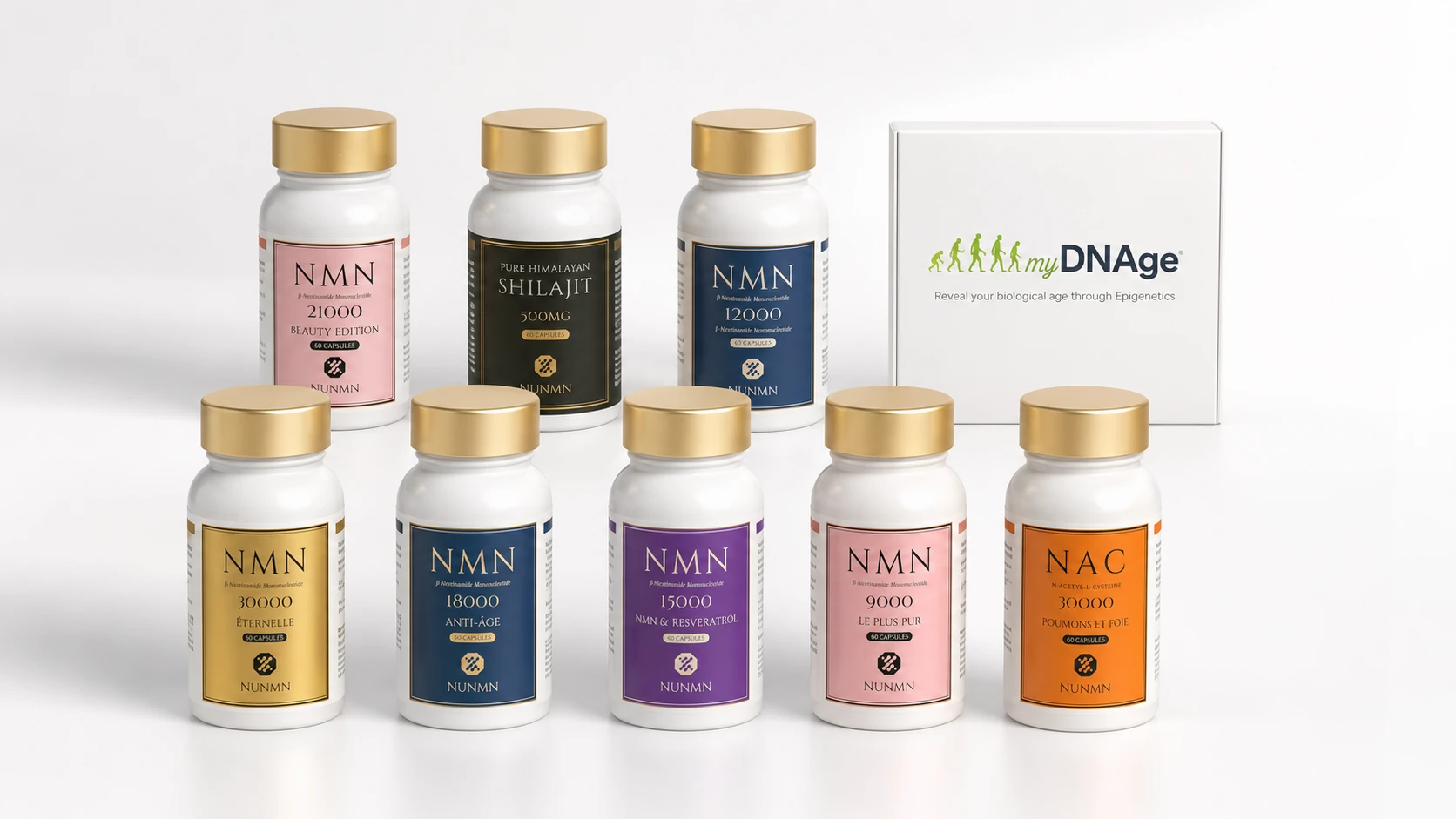
For a more detailed product checklist, review what makes a quality NMN supplement, learn how to read an NMN COA, and compare the matching files in the testing document library.
Frequently asked questions
What does NMN stand for?
NMN stands for nicotinamide mononucleotide. It is a nucleotide-related molecule used as an intermediate in the body’s biosynthesis of NAD+.
Is NMN the same as vitamin B3?
No. NMN is involved in pathways that use vitamin B3-related compounds, and some Canadian product licences describe NMN as a source of vitamin B3, but NMN is not simply another name for niacin or nicotinamide.
Is NMN the same as NAD+?
No. NMN is a precursor that NMN adenylyltransferase enzymes can convert into NAD+. NAD+ is the coenzyme used in redox and signaling reactions.
Does NMN occur naturally in food?
Small amounts have been measured in some foods, but normal serving sizes do not provide amounts comparable with many supplement labels. Food claims also vary with analysis and preparation.
Does NMN increase NAD+ in humans?
Several small trials report increases in blood or cellular NAD-related measurements after oral NMN. The size and clinical meaning of the change vary, and it does not prove that NMN reverses aging.
What are the proven benefits of NMN?
Human evidence is not strong enough to claim broad proven anti-aging benefits. Some trials report changes in selected biomarkers or performance measures, while systematic reviews find many outcomes inconsistent or not significantly different from placebo.
Is NMN licensed in Canada?
Some specific NMN products have active Health Canada product licences. An NPN applies only to the exact licensed brand, formula, medicinal ingredient amount, dosage form and authorized conditions of use.
How should a beginner compare NMN products?
Compare the exact amount per capsule, capsule count, full ingredient list, directions, cautions, product-specific NPN and lot-specific testing. Do not choose solely by the largest number on the front label.